Health · Solo product owner · 2021
Alzunes: music for people with Alzheimer’s, chosen by the people who love them
TL;DR
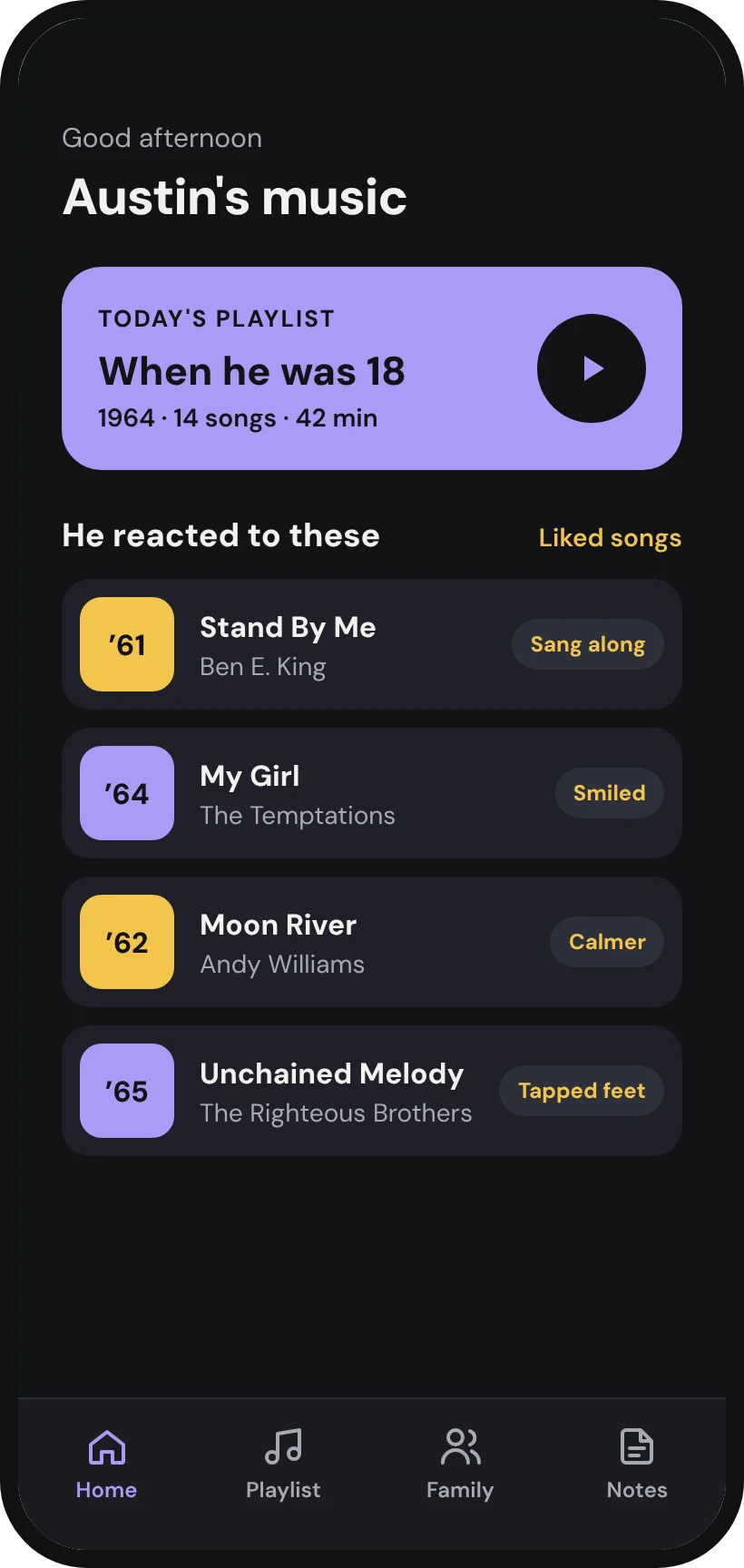
Families caring for someone with Alzheimer’s have very few tools for calming them or connecting with them at home. I started with a long list of ideas and narrowed it to one I could build and test safely: a music app that builds a playlist from the person’s birth year, learns from what the caregiver likes, and keeps notes for their music therapist.
MY ROLE
Solo: product scope, research, design, prototype and UI build
PRIMARY USER
The caregiver. The patient listens but never uses the app.
TIMELINE
3 months, including coding · IRB approved
METHODS
9-app competitive review · expert caregiver interviews · lo-fi + hi-fi testing
01 · Why this problem
Families end up as caregivers with almost no help
I’ve watched relatives lose themselves to Alzheimer’s. I’ve also watched the family members caring for them make it up as they go, because most of the guidance out there is written for doctors and nurses.
How might we help caregivers calm and connect with the person they love, at home, using something they already enjoy?
02 · Discovery
What I looked at, and who helped
A family friend who had looked after his father for years, and volunteered at a local Alzheimer’s centre, became my go-to person. Together we went through nine brain-training, memory and caregiver apps.
Nostalgia calms
Photos, scrapbooks and recorded voices of family (MEternally, ALZ Calls) seemed to help most when someone was agitated.
A lot of “brain training” isn’t backed by much
Most apps didn’t say how their exercises were picked. Only a few, like Constant Therapy, were built on clinical research.
Caregivers need support too
Practical tips and a few minutes off mattered as much as anything made for the patient.
03 · The product call
Every idea could have been its own app. I picked the one I could build and test safely.
IN SCOPE: MUSIC THERAPY
Safe to test. Only caregivers use it, so no patient had to be part of a study.
There’s evidence. Research, and the documentary Alive Inside, show familiar music can reach people even late in the disease.
Caregivers get a break. Someone can listen without being watched every minute.
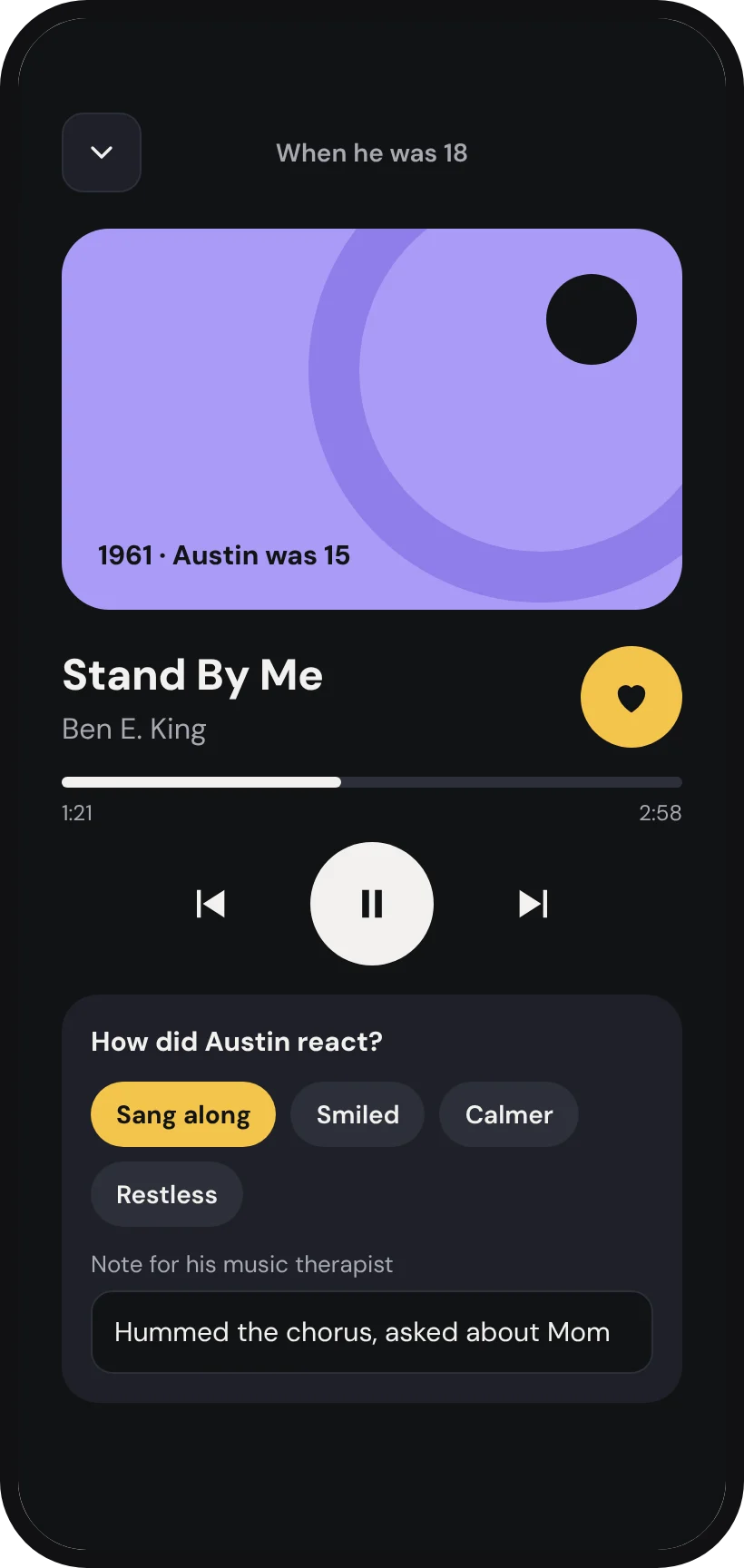
Therapists get notes. Reactions are logged for the music therapist.
DEFERRED
Memory games and puzzles, AI voice calls from loved ones, a caregiver training library and nutrition tips. Each of these needs clinical partners and much more than three months.
04 · Testing → 3 changes
What changed after testing
WHAT WE HEARD
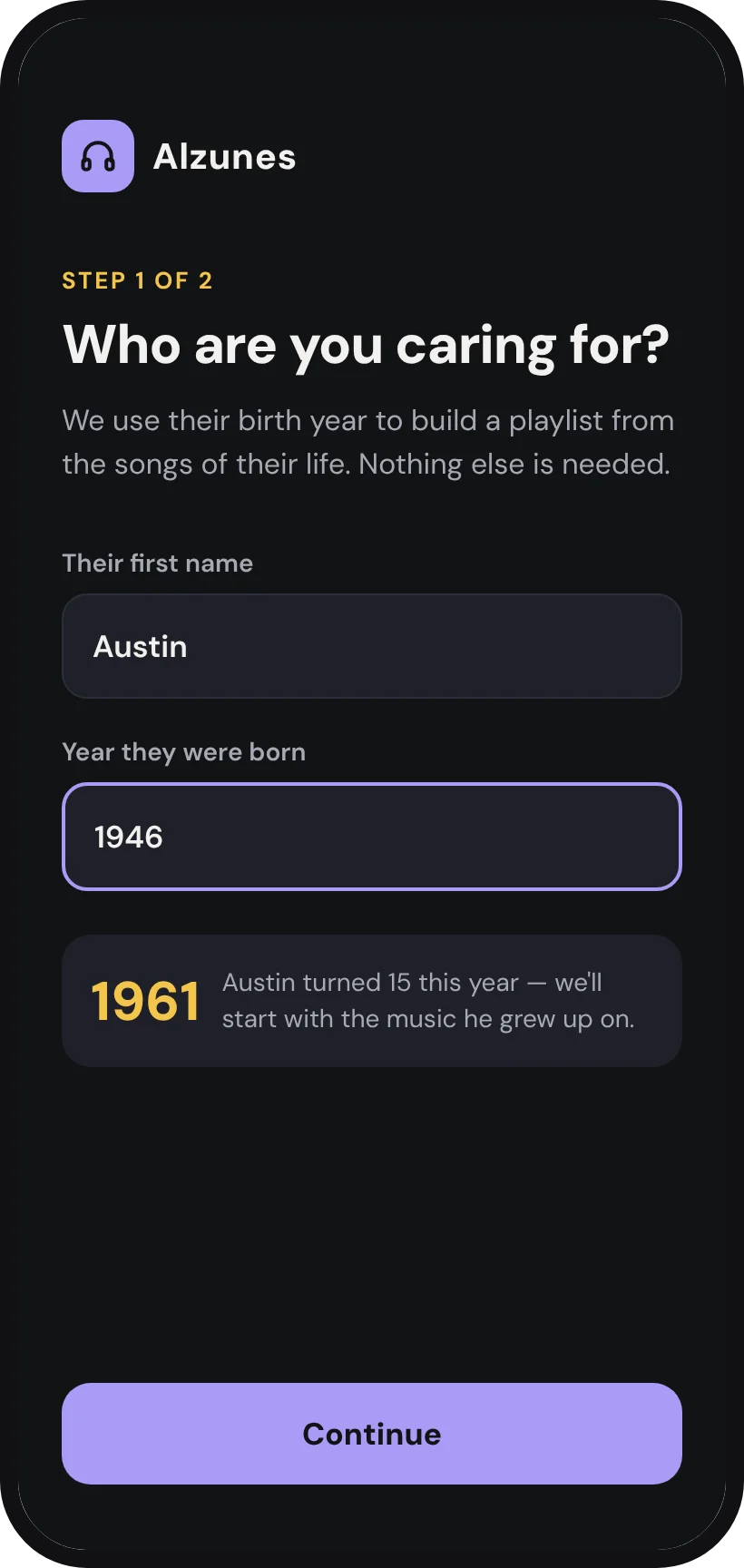
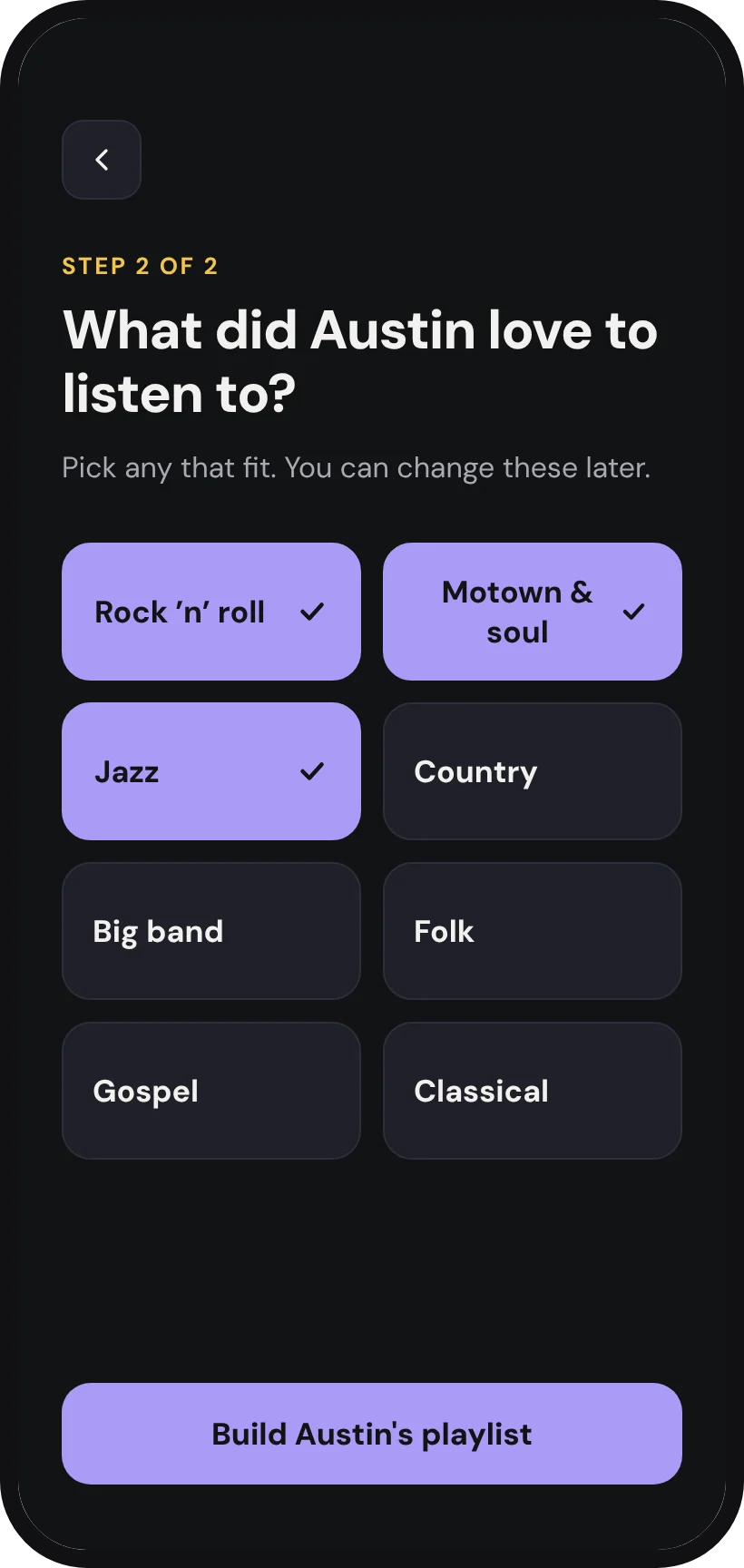
"Why do we need to fill out their hobbies and occupation?"
WHAT I CHANGED
Now the birth year is the only thing you have to enter. Genres got their own screen, a bit like Netflix.
WHAT WE HEARD
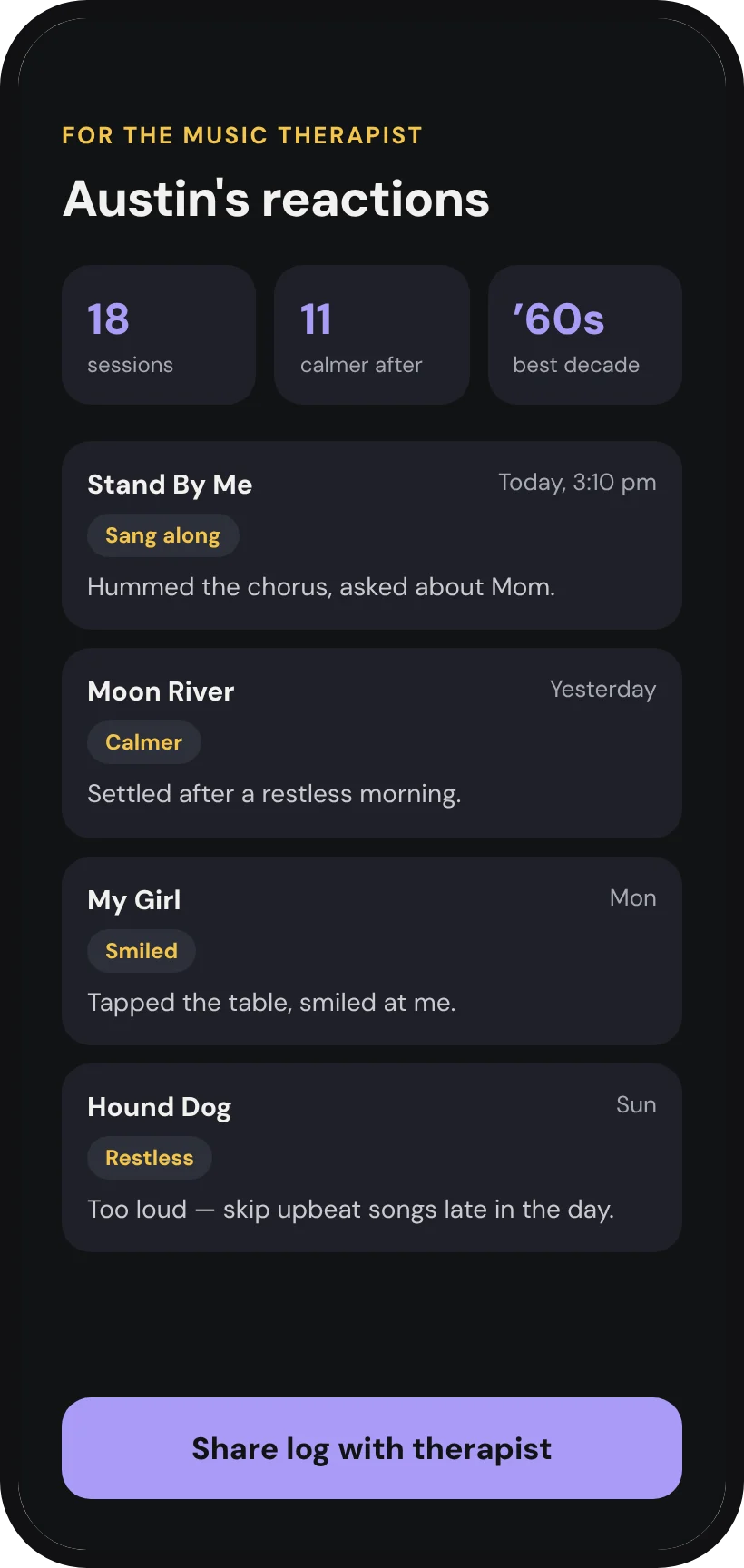
"The emoji slider is too small, and the emojis look childish."
WHAT I CHANGED
I swapped it for one big Like button that saves the song and improves the next picks, plus quick reaction tags and a note for the therapist.
WHAT WE HEARD
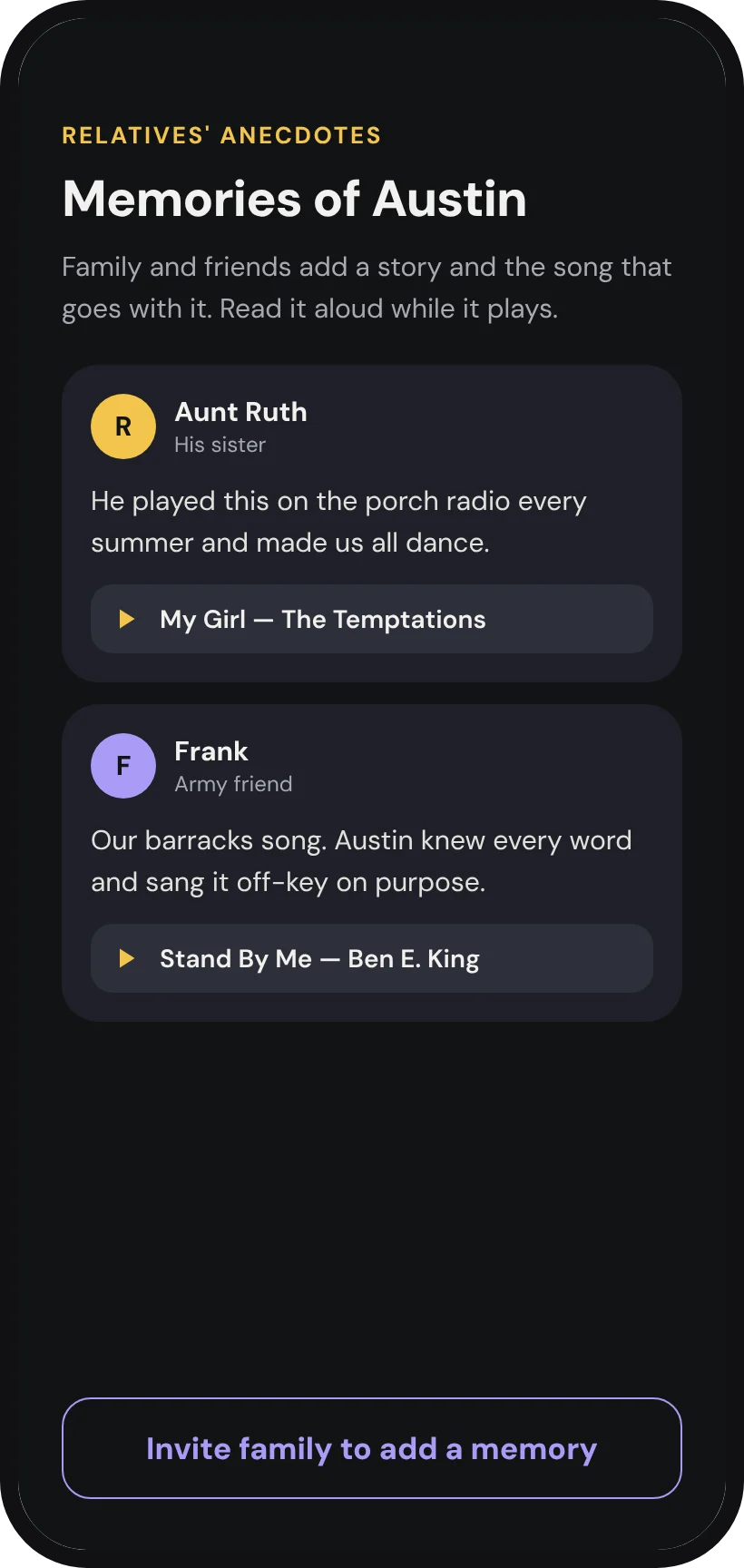
"If dark mode is a choice, follow dark-mode standards. It's too colourful." And: "I love that family can share memories."
WHAT I CHANGED
I cut the palette down to two colours plus neutrals, and gave family memories their own tab.
05 · Constraints, honestly
An IRB took longer than the project
Because this touched on health, it needed ethics (IRB) approval. That came through after the project deadline, so I could only test with one caregiver who had signed a waiver. The good news is the approval is in place, so a next round could start with doctors, therapists and families straight away.
Metrics I'd track at launch
Good reactions. How many songs get logged as smiled, sang along or calmer.
Sessions per week in each home, and how much of a break caregivers say they get.
Family memories added. A sign the wider family is getting involved.